Karachi is Sindh’s capital, Pakistan’s economic engine and home to more than 20 million people. Yet broken roads, sewage, water shortages, garbage, poor transport and unplanned construction continue to define daily life.
PPP, MQM, PML-N, Jamaat-e-Islami and PTI have all exercised power at different levels. Military governments also ruled Pakistan. Their responsibility is not equal, but no major political force can claim complete innocence.
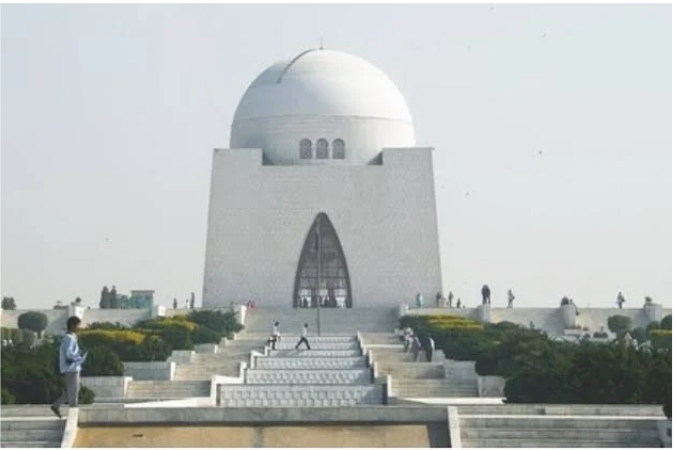
Mazar-e-Quaid — a symbol of Karachi’s historic importance.
PPP carries the greatest present responsibility because of its prolonged control of Sindh. MQM had major influence and important opportunities but failed to build lasting, transparent institutions. PTI received a strong Karachi mandate in 2018, yet its federal government did not deliver structural reform. PML-N never established a sustained national policy for the country’s largest economic centre. Jamaat-e-Islami has raised municipal concerns but has held limited recent executive power. Military rulers created temporary arrangements instead of permanent democratic institutions.
The central failure is fragmented government. Karachi is divided among the Sindh government, KMC, town administrations, cantonments, development authorities, water and waste agencies, port bodies and federal institutions. Authority is scattered, so accountability disappears. The mayor receives public blame but lacks full control over essential services.Karachi’s population grew far faster than housing, water, drainage, roads and transport. Informal systems became profitable: tankers replaced reliable water, private transport replaced mass transit, and encroachments replaced planning. Meanwhile, governments treated Karachi mainly as a source of taxes and political leverage.
The solution is not another temporary package. Karachi needs one empowered metropolitan government, a directly elected mayor, control over water, waste, transport and planning, a guaranteed share of revenue, independent audits and a long-term development plan protected from political changes.Karachi has not failed because its people lack talent or resilience. It has declined because those controlling its authority and revenue avoided complete responsibility. Until power, money and accountability are placed together, the blame game will continue—and Karachi will keep paying the price.