WHAT A1C IS REALLY TELLING YOU
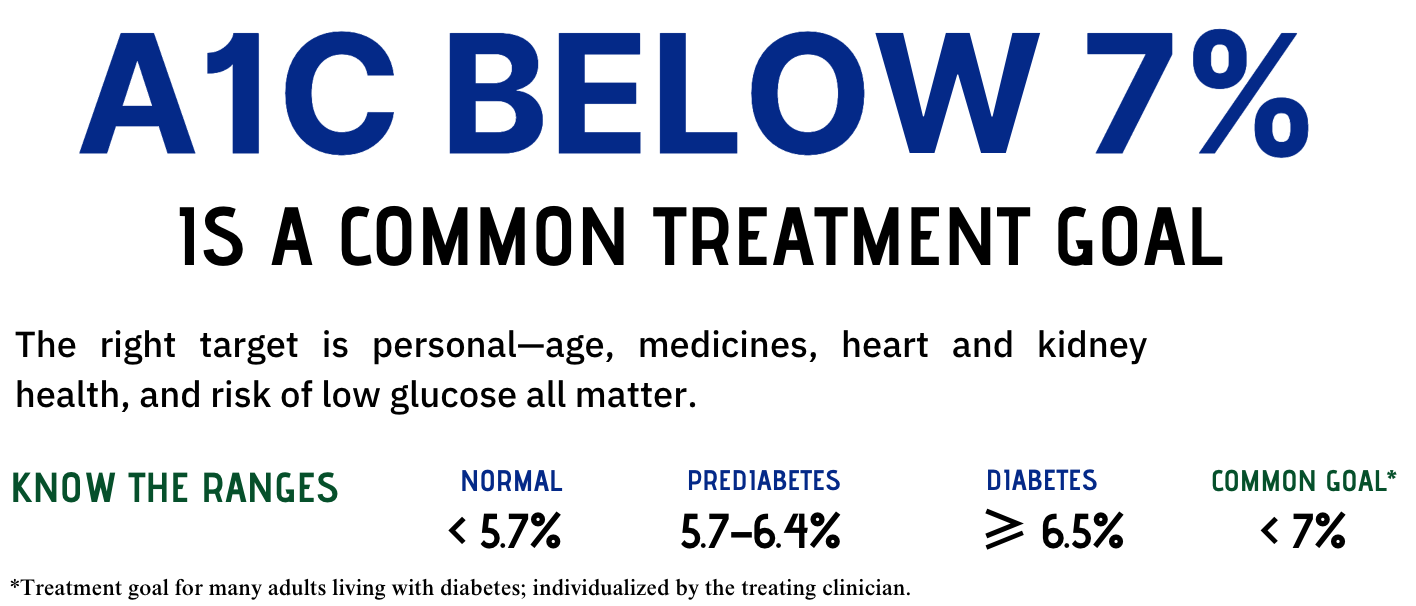
A1C is not today’s glucose reading. It reflects roughly the previous two to three months.
The useful changes begin in ordinary days: a better-built meal, movement after eating, stronger muscles and more reliable sleep.
A meter or CGM can show improvement first; A1C is the longer report that follows.
The goal is not one perfect day. It is a safe pattern you can repeat until better readings become ordinary.
01 BUILD A BALANCED PLATE
Make half the plate non-starchy vegetables, one quarter lean protein and one quarter high-fiber carbohydrate. The aim is not to ban every carb; it is to control portions and slow the post-meal rise.
02 USE FIBER TO YOUR ADVANTAGE
Make half the plate non-starchy vegetables, one quarter lean protein and one quarter high-fiber carbohydrate. The aim is not to ban every carb; it is to control portions and slow the post-meal rise.
02 WALK AFTER THE MEAL
Make half the plate non-starchy vegetables, one quarter lean protein and one quarter high-fiber carbohydrate. The aim is not to ban every carb; it is to control portions and slow the post-meal rise.
04 KEEP YOUR MUSCLES ACTIVE
Resistance exercise two or three times weekly can improve insulin sensitivity and preserve muscle with age. Bands, light weights or other suitable resistance work can count; match the intensity to your health and ability.
04 PROTECT YOUR SLEEP
Repeated poor sleep can worsen insulin resistance and glucose regulation. Keep a consistent sleep routine, and if sleep apnea is present, use prescribed therapy consistently.
ONE NUMBER IS NOT THE WHOLE STORY
Lower A1C is not automatically safe. Frequent hypoglycemia can hide inside a “looking average.” This is especially important for older adults using insulin. A1C is durable control with as few lows as possible.