PAV 5th Edition
PAV@pakamericanvoice.com
Aug 16, 2026
WASHINGTON: President Donald Trump has signed a series of executive orders aimed at restricting birthright citizenship in the United States, a move that has triggered intense political debate and is expected to face significant legal challenges. The policy seeks to redefine who qualifies for automatic U.S. citizenship at birth, one of the most established principles of American constitutional law.
Birthright citizenship is guaranteed under the 14th Amendment to the U.S. Constitution, adopted in 1868 following the Civil War. The amendment states that all persons born in the United States and subject to its jurisdiction are citizens of the United States. For more than 150 years, this provision has granted citizenship to nearly all individuals born on American soil, regardless of their parents’ immigration status.
The new executive orders aim to deny automatic citizenship to children born in the United States if their parents are in the country illegally or are present on temporary visas. Supporters of the policy argue that the existing system creates incentives for illegal immigration and places additional
burdens on public resources. They believe stricter rules are necessary to protect the integrity of the immigration system and strengthen border security.
Trump and his supporters have long argued that the phrase “subject to the jurisdiction” of the United States has been interpreted too broadly. They contend that the Constitution was never intended to grant citizenship automatically to the children of individuals who entered the country unlawfully. The administration maintains that the executive orders are designed to restore what it considers the original meaning of the 14th Amendment.
Opponents, however, strongly disagree. Constitutional scholars, immigration experts, and civil rights organizations argue that birthright citizenship is clearly protected by the Constitution and cannot be altered through executive action. They point to longstanding Supreme Court decisions that have upheld the principle that individuals born in the United States are citizens, regardless of their parents’ nationality or immigration status.
Several civil rights groups and state governments have already announced
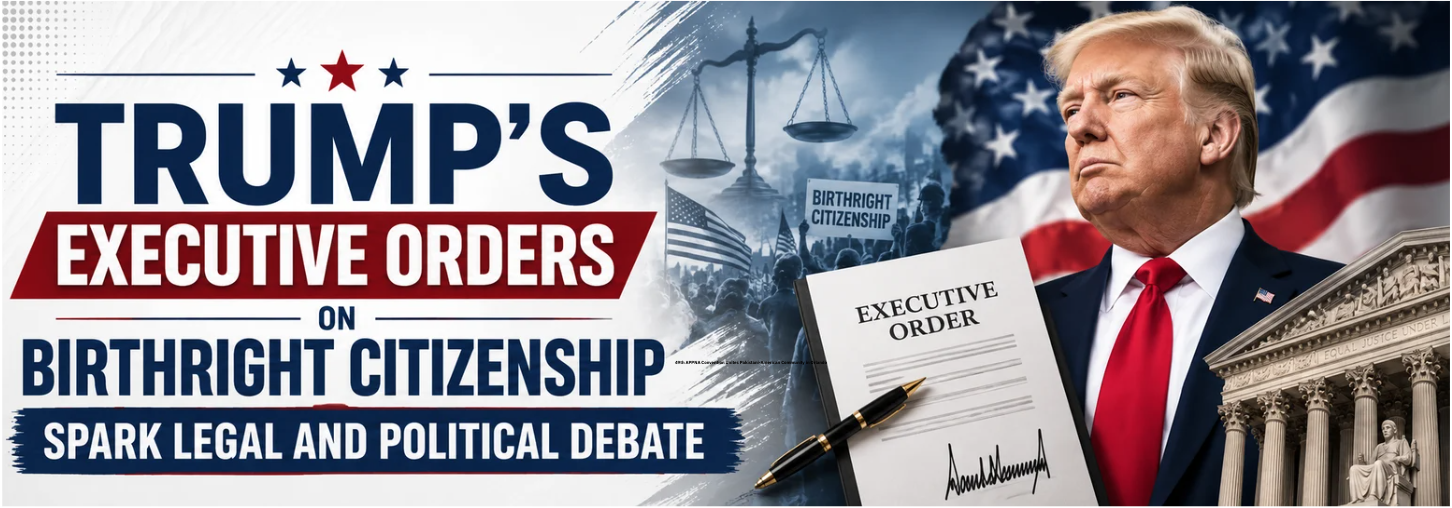
plans to challenge the executive orders in federal court.Legal experts predict that the issue could ultimately reach the U.S. Supreme Court, where judges may be asked to determine whether a president has the authority to limit birthright citizenship without congressional approval or a constitutional amendment.
The issue has also become a major political flashpoint. Republicans generally view stricter immigration policies as necessary to address border security concerns, while Democrats argue that the orders undermine constitutional protections and American values. Immigration is expected to remain one of the defining issues of future elections, making the birthright citizenship debate a central topic in national politics.
For millions of immigrants and their families, the outcome of the legal battle could have far-reaching consequences. If the executive orders are upheld, they could significantly alter the way citizenship is granted in the United States. If struck down, they may reinforce the long-standing interpretation of the 14th Amendment and preserve the existing system of birthright citizenship.